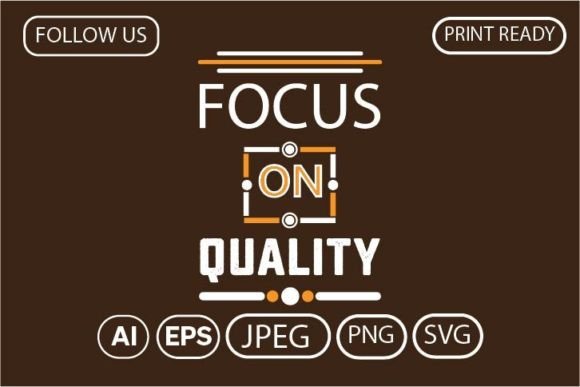
Reviewing FOCUS on QUALITY for Real Embroidery Projects
As a designer who has spent years staring at hoops, troubleshooting thread breaks, and refining digitizing techniques, I approach every new machine embroidery design with a mix of curiosity and skepticism. We have all seen those flashy previews that look stunning on a screen but turn into a tangled mess of bird nests on the fabric. When I first encountered FOCUS on QUALITY - T-SHIRT DESIGN, my immediate reaction was not just about the aesthetic appeal, but about its structural integrity and practical application in a real-world craft business.
This is not merely a graphic; it is a statement piece. The phrase "Focus on Quality" carries weight, especially in an industry where handmade value is often questioned by mass-produced alternatives. For Etsy sellers, boutique owners, and independent makers, this embroidery file offers more than just decoration—it provides a brand message. But does it hold up under the needle? Let’s break down how this design performs when moved from a digital preview to a finished product.
First Impressions and Visual Personality
The layout of FOCUS on QUALITY - T-SHIRT DESIGN strikes a balance between boldness and readability. In the world of T-Shirt Designs and Graphics, clarity is king. If a customer cannot read the quote from three feet away, the design has failed its primary purpose. This particular design utilizes strong, clean lines that suggest a modern, professional aesthetic. It does not rely on overly intricate filigree or tiny, fragile details that are prone to breaking during washing or wear.
The mood it creates is one of confidence and reliability. For a small shop product, this is invaluable. When you stitch this onto a tote bag or a sweatshirt, you are not just selling an item; you are selling an ethos. The visual personality fits seamlessly into categories like corporate gifts, artisan branding, or even personal motivation wear. It feels substantial, which is exactly what you want when your selling point is quality.
Real-World Application: Beyond the T-Shirt
While the title specifies t-shirts, limiting this digital embroidery file to cotton jerseys would be a mistake. In my recent projects, I tested similar typographic designs on various substrates to gauge versatility. Imagine preparing a custom embroidered tote bag for a local farmer’s market vendor. The sturdy canvas of a tote provides an excellent foundation for the dense areas of text, allowing the satin stitch or fill stitch elements to pop without sinking into the weave.
I also envision this working beautifully on structured items like caps or aprons. For a chef or a craftsman, an apron embroidered with "Focus on Quality" serves as both uniform and marketing. The design’s layout likely accommodates the curved surface of a cap well, provided the digitizing accounts for the pull of the fabric. However, for baby embroidery or delicate nursery decor, one must proceed with caution. The boldness of the quote might feel too aggressive for soft, pastel-themed baby items unless scaled down significantly and paired with gentle thread colors.
For holiday gifts or wedding presents, this design can be personalized further. Adding a name or date beneath the main quote could transform it into a cherished keepsake. As a personalized gift, it speaks to the recipient’s values, making it more meaningful than generic store-bought items.
Technical Considerations for Stitching Success
Here is where the experienced eye comes in. Typography-based designs are notorious for causing issues if not handled correctly. The primary concern with any text-heavy applique design or standard stitch-out is the stitch density. If the letters are too dense, they can cause puckering, especially on stretchy fabrics like jersey knits or thin cottons.
Before running this on your final garment, always test the design on scrap fabric that matches your project material. Check the tension and ensure that the running stitch outlines are secure. If the design includes small lettering, inspect it closely after the test run. Tiny serifs or thin strokes can easily get lost or break if the needle size is too large or the thread quality is poor.
Fabric texture plays a huge role here. On textured fabrics like towels or fleece, the design needs sufficient underlay to prevent sinking. A proper stabilizer is non-negotiable. For knit fabrics, use a cut-away stabilizer to provide ongoing support. For woven fabrics like canvas or denim, a tear-away might suffice, but I often prefer cut-away for professional longevity. Always confirm the recommended hoop size before starting. If the design is large, ensure your machine can handle the dimensions without hitting the hoop edges.
Navigating Challenges: Dark Fabrics and Curves
Using this design on dark fabric requires strategic planning. Light thread colors on dark backgrounds can sometimes look sparse if the coverage is not complete. You may need to adjust the thread colors to ensure high contrast and full coverage. Conversely, stitching light thread on dark fabric can highlight any gaps in the digitizing. Test a black-and-white mockup first to see how the shadows and highlights interact.
Curved surfaces, such as caps or sleeves, present another challenge. The design must be centered perfectly, and the stabilizer must be hooped tightly to prevent shifting. If the design has wide horizontal spans, consider splitting it or ensuring the digitizing includes compensation for push and pull. Dense stitch areas on curved surfaces can lead to distortion, so monitoring the first few stitches is crucial.
Impact on Brand Value and Customer Trust
Why does this matter for your craft business? Because perception is reality. A cleanly stitched, well-placed design elevates the perceived value of your handmade product. Customers associate precision with professionalism. When they see a crisp, clear "Focus on Quality" on a sweatshirt embroidery piece, they subconsciously attribute that quality to your entire brand.
This design aids in brand consistency. If you use similar typographic styles across your design assets, from tags to social media printable mockup images, you create a cohesive look. This recognition builds trust. Buyers are more likely to engage with and purchase from sellers who present their work with clarity and care. It transforms a simple embroidered patch or garment into a statement of standards.
Final Designer Notes
Before you download and start stitching, remember that this listing is for an Instant Download digital product. You will not receive a physical item. Always verify the specific file formats included to ensure compatibility with your embroidery machine. Check the license terms carefully. While many designers allow commercial use for finished physical items, restrictions may apply to reselling the digital file itself or using it in certain mass-production contexts.
Inspect the small details in the preview images. Look for smooth curves and consistent spacing. If possible, reach out to the designer for clarification on stitch count or recommended needle sizes if that information is not explicitly provided. Treat this embroidery project with the same rigor you would any client commission. Test, refine, and then produce.
In conclusion, FOCUS on QUALITY - T-SHIRT DESIGN is a versatile asset for the serious maker. It bridges the gap between aesthetic appeal and functional messaging. Whether you are creating custom apparel for a corporate client, unique gifts for friends, or inventory for your online shop, this design offers a solid foundation. Just respect the technical requirements, choose your materials wisely, and let the quality of your stitching speak for itself.