Reviewing One Spooky Mama Sublimation Design
As a designer who spends half my life staring at digitized stitch paths and the other half troubleshooting tension issues on the shop floor, I approach new assets with a healthy dose of skepticism. We are constantly bombarded with digital files that look stunning on a screen but fall apart under the needle. When I first encountered One Spooky Mama Sublimation Design, my initial reaction was not about how it would print, but how its visual language would translate to thread. While this asset is marketed primarily for sublimation, understanding its graphic structure is vital for any creative entrepreneur looking to adapt high-quality visuals into tangible handmade product lines.
First Impressions and Visual Mood
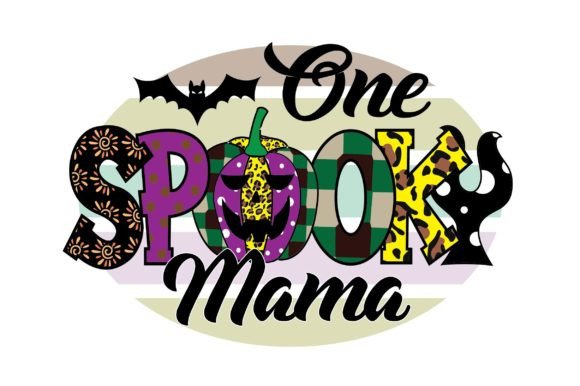
The design carries a playful yet polished aesthetic that immediately signals its target audience: modern parents who love Halloween but want to avoid the overly grotesque or cheap-looking tropes often found in seasonal decor. The layout balances bold typography with eye-catching graphics, creating a focal point that demands attention without feeling cluttered. For an embroidery designer, this balance is crucial. A design that is too busy becomes a nightmare to digitize, while one that is too simple lacks commercial appeal.
The mood here is inviting and whimsical. It feels like it belongs on a cozy autumn afternoon rather than a haunted house scare. This specific emotional resonance makes it highly versatile. It is not just a holiday item; it is a lifestyle statement. When evaluating such Graphics, I look for clean lines and distinct shapes. These elements determine whether a design will hold up when converted from a raster image into a vector-based embroidery file or used as a reference for manual digitizing.
Real-World Application: The Custom Sweatshirt Scenario
Let’s move from theory to practice. Imagine a client requests a custom sweatshirt embroidery piece for a boutique baby shower happening in late October. They want something unique, not mass-produced. Using the visual cues from One Spooky Mama Sublimation Design as a blueprint, we can create a stunning personalized gift.
In this scenario, the bold quote serves as the anchor. If we were to digitize this for a left-chest placement, the clarity of the lettering is paramount. Small, intricate details in the original graphic might need to be simplified to ensure legibility after stitching. The "eye-catching" nature of the source art suggests that high-contrast thread colors would work best. A bright orange or neon green against a charcoal heather sweatshirt would mimic the vibrancy of the sublimation original while adding the tactile luxury of thread.
This approach transforms a digital asset into a premium custom apparel item. Customers perceive embroidered goods as higher value than printed ones due to the labor and skill involved. By using this design as inspiration, you elevate a simple holiday shirt into a heirloom-quality piece.
Navigating Technical Constraints
However, we must address the elephant in the room: this is a sublimation design, not a native machine embroidery design. Sublimation relies on ink bonding with polyester fibers, allowing for unlimited colors and gradients. Embroidery relies on physical threads, limited by color changes and stitch density. Therefore, direct conversion is rarely seamless.
If you plan to use this graphic for an embroidered patch or a tote bag design, you must consider stitch density. Dense areas in the original graphic, if stitched fully, could cause puckering, especially on lighter fabrics. You would likely need to employ a combination of fill stitch for larger background areas and satin stitch for borders and text to maintain definition. For very small details, a running stitch might be necessary to keep the design lightweight and flexible.
Furthermore, consider the hoop size. If you are working with a 4x4 inch hoop for a cap or a small baby item, you may need to crop or simplify the design significantly. The full composition might only shine on larger surfaces like pillow covers or aprons. Always test the scaled-down version on scrap fabric first. Check how the stabilizer interacts with the fabric texture. A waffle-knit towel behaves differently than a smooth cotton canvas, and your digitizing strategy must adapt accordingly.
Commercial Viability for Etsy Sellers
For the Etsy seller or small shop owner, versatility is key to profitability. While the primary use case mentioned is T-shirts, expanding into home decor can boost average order value. Think about holiday embroidery on kitchen towels or nursery decor like blanket borders. The "Spooky Mama" theme fits perfectly into the growing market of festive family matching sets.
When listing these items, use high-quality printable mockup images to show potential buyers how the design looks in situ. Even if you are selling the physical embroidered item, showing it on a model helps customers visualize the scale. Remember, transparency in licensing is critical. Since this is a sublimation design, you must verify if the creator allows derivative works for commercial embroidery. Never assume that purchasing a PNG grants rights to sell stitched products. Always check the license terms before investing hours in digitizing and production.
Practical Designer Notes
- Contrast is King: Test your digitized version in black and white. If the design loses its shape without color, it needs more definition in the stitch path.
- Fabric Choice Matters: This design’s bold nature works best on stable fabrics. Avoid highly stretchy materials unless you use a cut-away stabilizer and adjust pull compensation.
- Thread Selection: Use matte threads for a vintage, cozy feel, or rayon for a shiny, vibrant pop that mimics the sublimation look.
- Scale Testing: Stitch out a sample at 50% size to ensure small text remains readable. If it blurs, increase the size or simplify the font.
- Washability: Ensure your stitch density is not so high that it creates a stiff plate on soft garments, which can be uncomfortable for babies.
Final Verdict
One Spooky Mama Sublimation Design offers a strong visual foundation for creative adaptation. It is not a plug-and-play solution for embroidery machines, but rather a high-quality reference for designers willing to put in the digitizing work. Its strength lies in its clear thematic identity and balanced composition. For those in the craft business looking to expand their design assets library, this graphic provides excellent inspiration for seasonal collections. By respecting the technical limitations of thread and fabric, you can transform this digital image into a tactile, beloved finished product that stands out in a crowded marketplace. Whether for a baby embroidery project or a bold adult hoodie, the potential is there for those who approach it with a designer’s eye and a crafter’s patience.