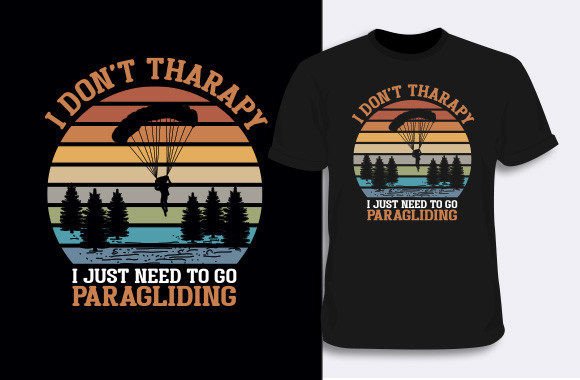
Reviewing Paragliding T Shirt Design 4 for Real Stitching
As an embroidery designer who has spent countless hours digitizing and testing files, I have learned that a graphic on a screen tells only half the story. The real test happens when the needle hits the fabric. Recently, I evaluated Paragliding T Shirt Design 4 to determine its viability for actual production work. This is not just about whether the image looks cool; it is about how this specific set of T-Shirt Designs translates into thread, how it holds up under the presser foot, and whether it adds genuine value to a finished product.
The first impression of this design is one of freedom and motion. The silhouette of the paraglider against the open sky creates an immediate emotional connection with adventure enthusiasts. For those of us in the craft business, mood matters. A design that evokes a feeling sells better than a static image. However, my initial excitement was tempered by a professional’s caution. I needed to know if the lines were clean enough for stitching or if they would turn into a muddy mess of thread breaks and puckering.
From Digital Asset to Threaded Reality
When I opened the files, I noted that Paragliding T Shirt Design 4 comes as a comprehensive package including PNG, AI, EPS, and SVG formats. For an embroidery specialist, the vector files (AI, EPS, SVG) are crucial. They allow me to inspect the paths and adjust the scale without losing resolution. While these are primarily Graphics intended for print or digital use, their clarity makes them excellent candidates for auto-digitizing or manual conversion into a machine embroidery design.
I imagined using this design for a custom order: a high-quality cotton tote bag for a local outdoor club. The wide, sweeping curves of the paraglider wing suggest that a fill stitch would work beautifully to capture the fabric texture of the canopy. However, the lines connecting the pilot to the wing are delicate. In a real-world scenario, these thin connectors could easily snap if the stitch density is too high or if the fabric shifts. This is where the reviewer’s eye must be critical. If you are planning to stitch this directly from a converted file, you must pay attention to the minimum stitch length to ensure durability.
Practical Applications for Small Shops
For Etsy sellers and small shop owners, versatility is key. This design fits naturally into several product categories. It works exceptionally well for sweatshirt embroidery, where the thicker fabric can support the weight of the threads without distorting. Imagine a heather grey hoodie with this design stitched in vibrant blues and oranges on the left chest. It signals quality and personalization.
It is also a strong contender for embroidered patch creation. Patches are trending, and a bold graphic like this stands out when backed with twill or felt. Because the design has a clear outline, it can be finished with a neat satin stitch border, giving it a professional, retail-ready look. For baby embroidery, however, I would advise caution. The details might be too complex for tiny onesies unless scaled down significantly, which could compromise the legibility of the paraglider shape.
If you are creating holiday embroidery gifts for travelers or adventurers, this design offers a unique alternative to standard text-based quotes. It serves as a visual story. When used on a tote bag design, it appeals to eco-conscious buyers who love the outdoors. The transparency of the PNG file included in the package also allows for easy creation of printable mockup assets, helping you visualize the final product before you even thread your machine.
Navigating Technical Challenges
While the aesthetic appeal is high, there are technical hurdles to consider. If you are working with stretchy fabrics, such as performance wear for actual paragliders, you must use a cut-away stabilizer. The dynamic nature of the sport means the garment will move, and a weak stabilization strategy will lead to registration errors. The design’s open spaces are forgiving, but the solid areas require careful tension balancing.
Dark fabrics present another challenge. Since this is a graphic-heavy design, you need high contrast. If stitching on navy or black, ensure your thread colors are bright and vibrant. A muted palette will get lost. I recommend testing the design in black and white first to check for value contrast. If the shapes blend together in grayscale, they will lack definition in thread.
Curved surfaces, like caps, require special attention. The wide span of the paraglider wing might not fit comfortably on a standard cap front panel without distortion. You may need to break the design into smaller elements or choose a larger hoop size if available. Always check the hoop size limitations of your machine before committing to a large-scale project.
Enhancing Brand Value and Customer Trust
Using high-quality design assets like Paragliding T Shirt Design 4 elevates your brand. Customers can spot a low-resolution, poorly executed graphic from a mile away. By taking the time to properly digitize or adapt these vectors for embroidery, you demonstrate professionalism. This builds trust. A well-stitched personalized gift becomes a keepsake, not just a commodity.
For commercial embroidery projects, consistency is vital. Ensure that every stitch aligns with your brand’s quality standards. If you are selling custom apparel, the durability of the stitch-out matters as much as the look. Test wash your samples. Does the thread shrink? Does the fabric pucker? These are the questions that separate hobbyists from serious entrepreneurs.
Final Designer Notes
Before you launch this design in your store, take these practical steps. First, always test on scrap fabric similar to your final product. Second, verify the licensing terms. While the package includes editable files, ensure you have the right to use them for commercial embroidery sales. Third, inspect the small details. Zoom in on the vector paths to smooth out any jagged edges that could cause needle deflection.
In conclusion, Paragliding T Shirt Design 4 is a promising asset for designers who understand the bridge between digital graphics and physical stitching. It offers a strong visual narrative suitable for handmade products ranging from patches to premium apparel. With careful attention to stabilizer choice, thread contrast, and stitch density, it can become a standout item in your portfolio. Treat it not just as a picture, but as a blueprint for craftsmanship, and your customers will appreciate the difference.