Juneteenth Design: A Designer’s Review
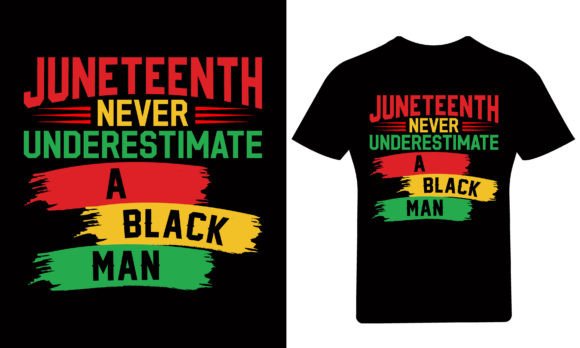
As an embroidery designer who has spent years digitizing and stitching everything from delicate baby onesies to heavy-duty workwear, I approach every new graphic with a critical eye. It is not enough for a design to look good on a screen; it must survive the needle, the thread tension, and the wash cycle. Recently, I evaluated the Juneteenth Never Underestimate a Black Man design to determine its viability for real-world commercial and personal projects. This is not just a review of aesthetics, but a practical assessment of how this specific quote and layout performs when translated into thread.
First Impressions and Visual Personality
The immediate mood of this piece is one of quiet strength and historical pride. Juneteenth is a celebration of freedom and resilience, and the phrase "Never Underestimate a Black Man" carries a weight that demands respect. Visually, the design relies on strong typography rather than complex illustrative elements. For an embroidery project, this is often a double-edged sword. Text-heavy designs require precise digitizing to ensure legibility, especially when the message is as impactful as this one.
The layout feels balanced, with a clear hierarchy that guides the eye. However, as a reviewer, my first thought was not about the font choice, but about the stitch path. How will those sharp corners hold up? Will the density be too high for a lightweight cotton tee? These are the questions that separate a amateur hobbyist from a professional craft business owner. The design exudes a modern, bold personality that fits well within contemporary T-Shirt Designs and Graphics trends, but its true test lies in the stitching.
Real-World Application: Beyond the T-Shirt
While the product description highlights its use for t-shirts, my experience suggests this design has broader potential. I imagined applying this to a heavy-weight canvas tote bag. The sturdy fabric would support the stitch density required for bold lettering, making it an excellent statement piece for community events or daily use. The contrast of white or gold thread against natural canvas could elevate the perceived value of the handmade product.
I also considered its application on a sweatshirt. Embroidery on fleece or French terry requires careful attention to stabilizer choice to prevent puckering. If the design is digitized with appropriate underlay stitches, it could sit beautifully on the chest of a hoodie, creating a premium custom apparel item. For smaller applications, such as an embroidered patch, the design would need to be scaled down significantly. This is where caution is necessary. Tiny lettering can become illegible if the stitch density is too high or if the thread color lacks contrast against the background fabric.
Technical Considerations for Stitchers
When working with text-based machine embroidery design files, the devil is in the details. Before committing to a final product, I always recommend testing the design on scrap fabric similar to your final material. For this specific quote, check the spacing between letters. In satin stitch applications, tight kerning can cause threads to merge, creating a blob effect rather than crisp letters. If the design uses fill stitches for larger elements, ensure the direction of the stitching complements the shape of the garment.
Fabric texture plays a crucial role here. On smooth fabrics like poly-cotton blends, the design will likely appear sharp and clean. However, on textured fabrics like linen or waffle knit, some detail may be lost. I advise using a cut-away stabilizer for stretchy fabrics to maintain the integrity of the design after washing. For dark fabrics, consider using a lighter thread color to ensure the message pops. A black-on-black embroidery might look sophisticated in person, but it can disappear in photos, which is detrimental for an Etsy seller relying on visual appeal.
Navigating File Formats and Licensing
The included files—Ai, EPS, and Transparent PNG—are standard for graphic design and printing, but they are not native embroidery formats. This is a critical distinction for beginners. You cannot load an AI file directly into most embroidery machines. You will need to use digitizing software to convert these graphics into an embroidery file compatible with your machine, such as PES, DST, or JEF. Alternatively, if you are purchasing a pre-digitized version, ensure you receive the correct format for your hardware.
For those looking to sell finished items, understanding licensing is paramount. While the design is marketed for printing, using it for commercial embroidery requires clarity on rights. Always confirm whether the license allows for the sale of physical goods featuring the design. For digital product sellers, reselling the file itself is typically prohibited unless explicitly stated. Protecting your craft business means respecting intellectual property and ensuring your customers receive a legitimate, high-quality product.
Enhancing Customer Trust and Brand Value
Incorporating meaningful quotes like this into your product line can significantly boost customer engagement. It signals that your brand stands for something beyond mere aesthetics. When a customer buys a personalized gift or a piece of holiday embroidery that resonates with their identity, they are more likely to become repeat buyers. The professionalism of the stitch-out reflects directly on your brand consistency. A sloppy stitch job can undermine the powerful message of the design, while a clean, well-executed embroidery enhances its impact.
Consider offering this design as part of a curated collection for Juneteenth celebrations. Pair it with complementary colors and fabrics to create a cohesive look. Use high-quality thread colors that resist fading, ensuring the finished product remains vibrant after multiple washes. This attention to detail builds trust and encourages positive reviews, which are vital for any small shop product or online store.
Final Verdict and Practical Advice
The Juneteenth Never Underestimate a Black Man design holds strong potential for various embroidery projects, from tote bag design concepts to sweatshirt embroidery. Its success depends largely on proper execution. Test extensively, choose the right stabilizer, and respect the limitations of your fabric and machine. Whether you are creating a baby embroidery item for a family member or a bulk order for a community organization, this design offers a powerful narrative when handled with care.
Remember to verify the specific stitch count and recommended hoop size if you are converting the graphic yourself, as these details were not provided in the initial package. By treating this graphic as a serious design asset rather than just a clipart element, you can create products that are not only visually striking but also durable and meaningful. For any designer or maker looking to add depth to their portfolio, this quote serves as a compelling canvas for creative expression through thread.