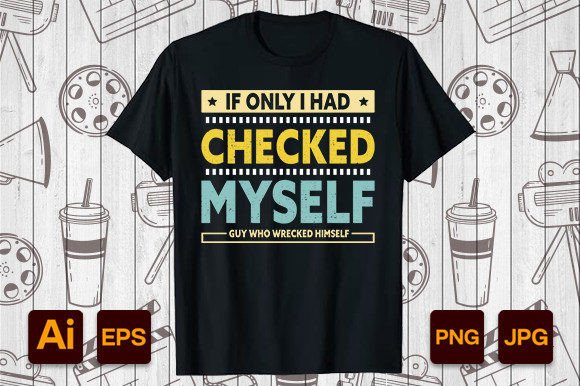
Reviewing the If Only I Had Checked Myself Design
As a designer who spends more time staring at stitch maps than actual fabric, I have learned that not every Graphics file translates well to thread. We often browse marketplaces for Print Templates and digital assets, assuming that if it looks good on a screen, it will look exceptional on a garment. However, the transition from pixel to needle requires a critical eye. Recently, I evaluated the If Only I Had Checked Myself T-shirt design to determine its viability for real-world embroidery projects. This is not just a graphic; it is a potential product line waiting to be stitched, provided we approach it with the right technical mindset.
First Impressions and Visual Mood
The initial appeal of the If Only I Had Checked Myself T-shirt concept lies in its casual, humorous vibe. The theme suggests a laid-back surfing trip or a Hawaii beach vacation, which immediately narrows down the target audience. For an embroidery designer, this context is crucial. It tells us that the design should feel relaxed, not rigid. When I first loaded the visual reference, I looked for clean lines and balanced negative space. A design intended for a sweatshirt embroidery project needs to breathe. If the elements are too cramped, the final finished product will look cluttered and cheap.
The mood here is playful. It fits perfectly into the category of personalized gifts or boutique branding where personality sells. Unlike formal monograms or intricate floral applique design work, this piece relies on readability and charm. It is the kind of image that makes a customer smile when they see it on a tote bag design or a casual hoodie. However, charm alone does not make a design stitchable. We must look deeper at how these shapes will hold up under the tension of the machine.
Real-World Application Scenarios
To truly test the value of this asset, I imagined several practical scenarios. First, consider a custom order for a family reunion or a group surf trip. The If Only I Had Checked Myself T-shirt design would serve as an excellent centerpiece for matching custom apparel. In this context, consistency is key. If you are producing twenty units, the design must be robust enough to handle slight variations in fabric tension without losing its shape.
Another strong use case is the Etsy seller looking to expand their craft business inventory. This design could easily be adapted for a holiday embroidery gift, perhaps for someone planning a winter escape to a warm climate. Imagine this stitched onto a high-quality cotton tote or a fleece-lined cap. The contrast between the rugged texture of the fabric and the smooth flow of the design creates visual interest. For small shop owners, having versatile design assets like this allows for quick turnaround times on personalized gift orders, which is essential during peak shopping seasons.
I also considered its use on home goods. While the primary association is apparel, the description mentions mugs and pillows. For a pillow cover, the design would need to be scaled appropriately. A large, bold version works well on textured linen, while a smaller, refined version might suit a kitchen towel. The versatility of the theme allows it to cross over from fashion to decor, increasing its commercial potential.
Technical Considerations for Stitching
Now, let us talk about the mechanics. When preparing this design for an embroidery project, stitch density is the first concern. Designs with a beach or surfing theme often include waves or organic shapes. If these are rendered with excessive fill stitch coverage, the fabric may pucker, especially on lighter materials like t-shirts. I recommend checking if the design uses a mix of satin stitch for outlines and lighter fill patterns for larger areas. This balance ensures the garment remains soft and wearable.
Fabric choice plays a massive role here. On a thick hoodie, the design will pop with minimal stabilization. However, if you are stitching on a thin, stretchy t-shirt, you must use a high-quality cut-away stabilizer. Without proper support, the weight of the thread can distort the fabric, ruining the crispness of the text or graphics. Always test the design on scrap fabric first. This simple step saves hours of frustration and prevents wasted materials.
Color selection is another critical factor. The If Only I Had Checked Myself T-shirt design likely features vibrant colors to match its tropical theme. When choosing thread colors, consider the background fabric. On dark fabrics, you may need to adjust the underlay stitches to ensure the top threads stand out. Conversely, on white or light fabrics, avoid using threads that are too similar in tone, as the details may get lost. Testing the design in black and white mockups can help you identify contrast issues before you thread the needle.
Navigating Potential Pitfalls
There are areas where caution is required. Small hoop sizes can be problematic if the design has wide dimensions. If you are working with a 4x4 inch hoop, you may need to split the design or reduce its size significantly, which could compromise the legibility of any text elements. Tiny lettering is notoriously difficult in embroidery. If the design includes small print, ensure that the font style is bold enough to survive the stitching process. Thin, delicate fonts often break apart or become unreadable after washing.
Additionally, consider the end-user’s care routine. Items like baby embroidery products or frequently washed aprons require durable stitching. High-density areas can become stiff and uncomfortable against the skin. For baby items, I would advise using softer threads and ensuring that no rough edges or jump stitches are left on the back. For curved surfaces like caps, the design must be digitized specifically for that contour. A flat design pulled over a curved cap will distort, so always verify if the file is optimized for headwear if that is your intended application.
Commercial Value and Brand Consistency
For the digital embroidery file seller or the small shop product creator, this design offers significant value. It taps into the evergreen market of travel and humor. When used correctly, it enhances brand consistency by offering a cohesive look across different products. Whether it is an embroidered patch for a jacket or a direct stitch on a sweater, the recognizable theme builds customer trust. Buyers engage more with products that tell a story, and this design tells a clear, relatable one.
However, professionalism is paramount. Before listing any commercial embroidery items, confirm the licensing terms. Just because a design is available as a Print Template or graphic does not automatically grant rights for mass production or resale of finished goods. Always read the license agreement. If the details are not clearly provided in the product description, reach out to the creator. Protecting your business from legal issues is just as important as protecting your stitch quality.
Final Verdict for Makers
The If Only I Had Checked Myself T-shirt design is a promising addition to any designer’s library. It bridges the gap between fun aesthetics and practical application. By paying attention to hoop size, stabilizer choice, and thread contrast, you can transform this digital asset into a high-quality handmade product. Whether you are creating a unique gift or stocking your online store, this design rewards careful preparation with professional results. Remember, the best embroidery is not just about the machine; it is about the maker’s insight. Test, adjust, and stitch with confidence.